Intuition
The question ask for implementing a queue using stacks. The key point is to use existing methods of stacks to simulate the queue.先来复习一下stack和queue的区别
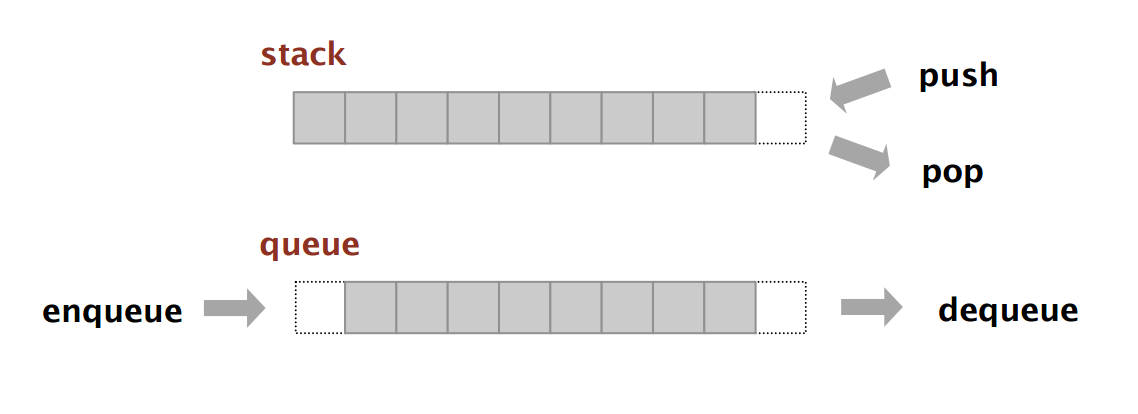
peek()method名字,为看一下马上要被pop or dequeue出去的元素是什么,但是不会真的pop出去
Approach1: O(n) in push, O(1) in pop
因为要用2个stack来模拟queue,所以在push的时候, - 需要把s1里的元素都pop出来,push到s2里, - 然后再把新元素push到s2里, - 最后再把s2里的元素都pop出来,push到s1里。
其它的functionality like pop or peek, 就是直接操作s1即可.
最难的push, 你可以抽象成spring coil like, s1是左边弹簧,你先把它移动到右边s2, 你加入新元素,你再移动回来

Approach 1具体图解如下

class MyQueue:
    def __init__(self):
        self.s1 = []
        self.s2 = []

    def push(self, x: int) -> None:
        while self.s1:
            self.s2.append(self.s1.pop())
        self.s1.append(x)
        while self.s2:
            self.s1.append(self.s2.pop())

    def pop(self) -> int:
        return self.s1.pop()

    def peek(self) -> int:
        return self.s1[-1]

    def empty(self) -> bool:
        return not self.s1


# Your MyQueue object will be instantiated and called as such:
# obj = MyQueue()
# obj.push(x)
# param_2 = obj.pop()
# param_3 = obj.peek()
# param_4 = obj.empty()
Approach 2: O(1) in push, O(1) in pop
这个有点tricky, - 利用s1的tail, 来模拟queue的tail, 进行enqueue - 利用s2的tail, 来模拟queue的head, 进行dequeue and peek

class MyQueue:
    def __init__(self):
        self.s1 = []
        self.s2 = []

    def push(self, x: int) -> None:
        self.s1.append(x)

    def pop(self) -> int:
        self.peek()
        return self.s2.pop()

    def peek(self) -> int:
        # when s2 is empty
        if not self.s2:
            while self.s1:
                self.s2.append(self.s1.pop())
        return self.s2[-1]

    def empty(self) -> bool:
        return not self.s1 and not self.s2